Lee Ling + Atelier Tseng Wei-Hsiang
New Taipei Municipal Ziqiang Junior High School|Encounter · Dialogue
“ True connection lies in the ability to establish understanding and resonance between one another. ”
— Susan Johnson
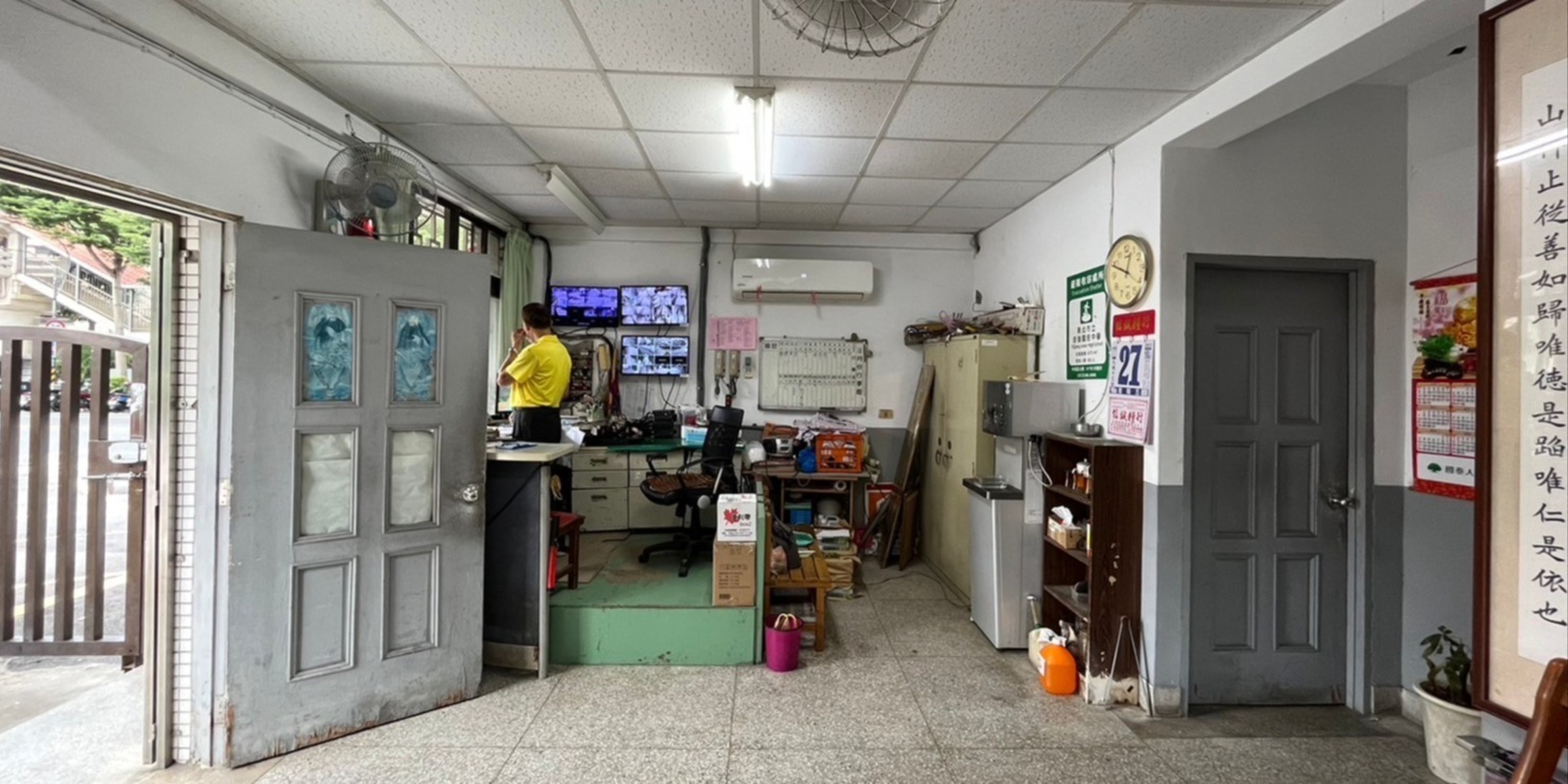
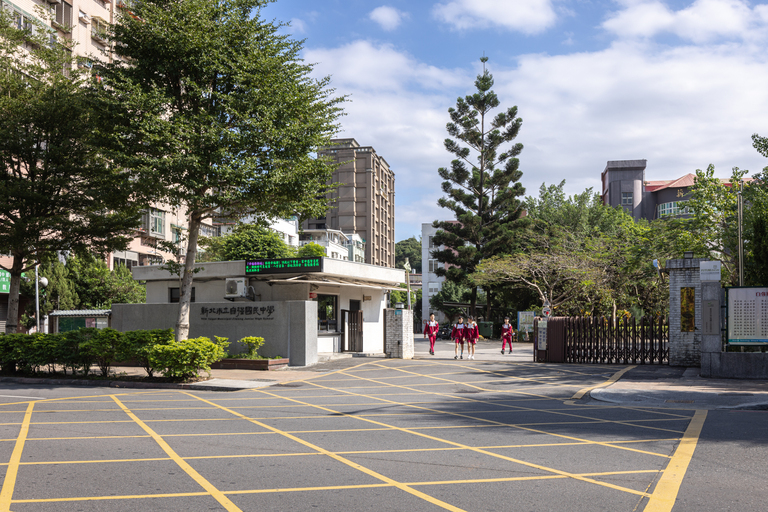
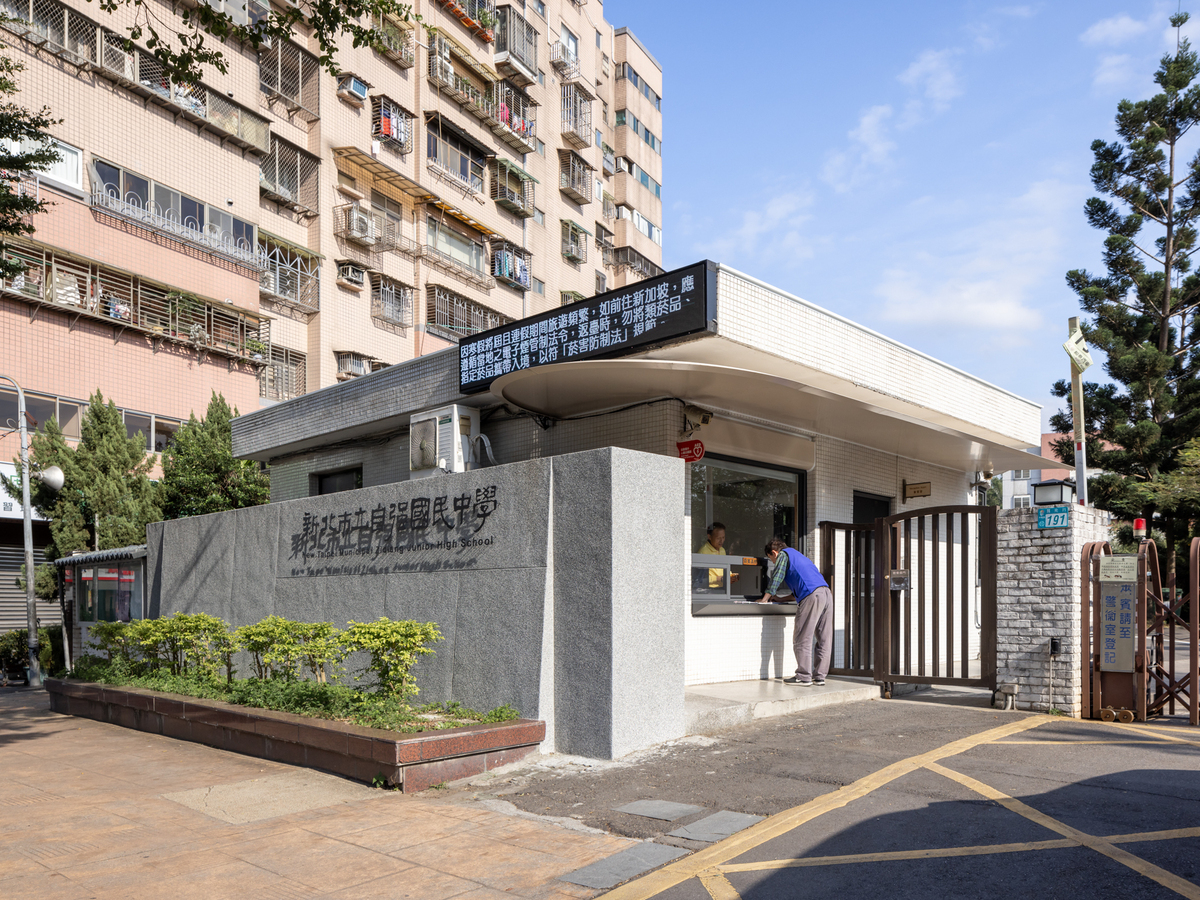
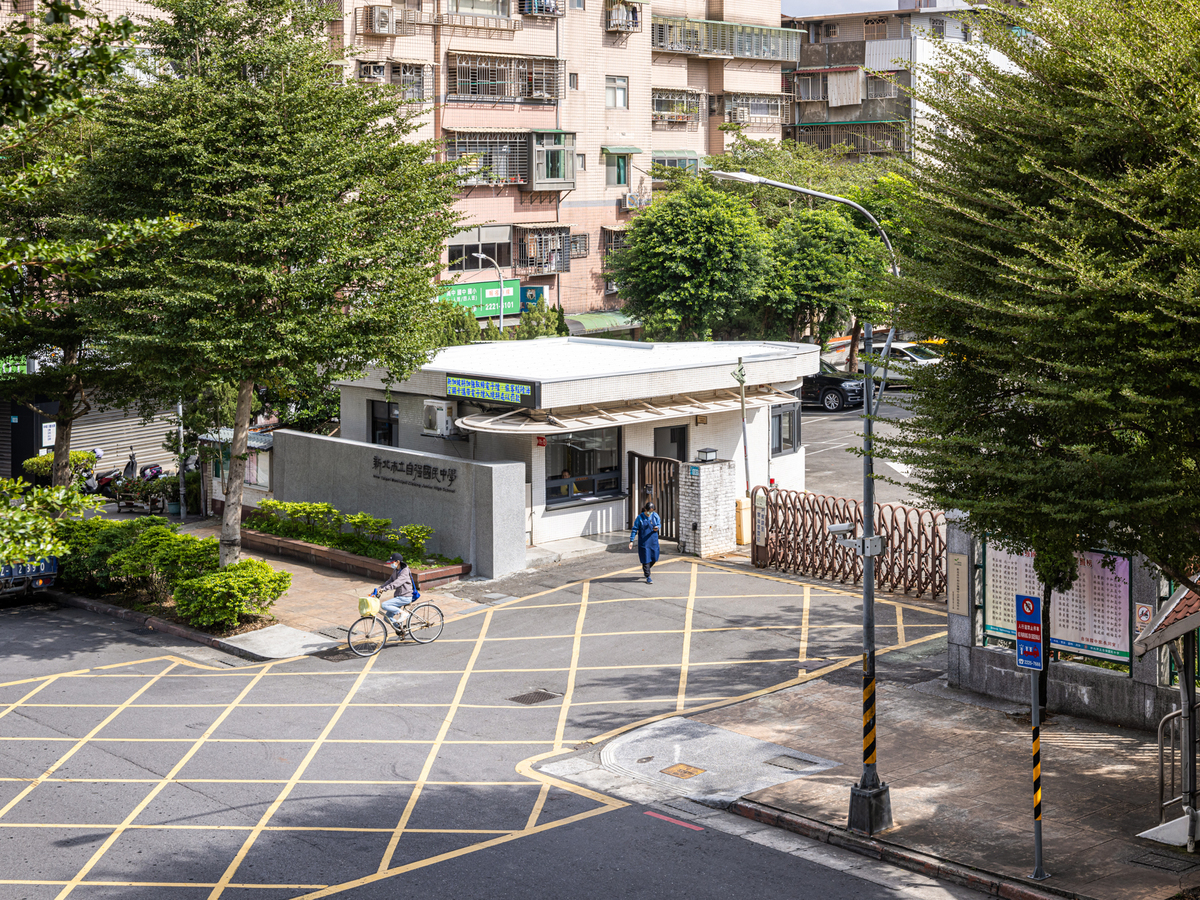
The security room of Ziqiang Junior High School is not only the gateway to the campus but also the starting point of its green corridor. Within this compact 16-ping space, countless forms of interaction—visible and invisible—take place daily: safety checks at the entrance, item drop-offs between parents and students, waiting area for pick-up, donation collection for community members, delivery of packages and documents, and brief teacher–parent conversations. Despite being the smallest spatial unit on campus, it plays a warm and essential role as a welcoming and mediating hub. Yet, after carrying such responsibilities for many years, both the interior and exterior had become dim, crowded, and visually chaotic.
Breaking and Reorganizing: Defining Functions and Reshaping Spatial Identity
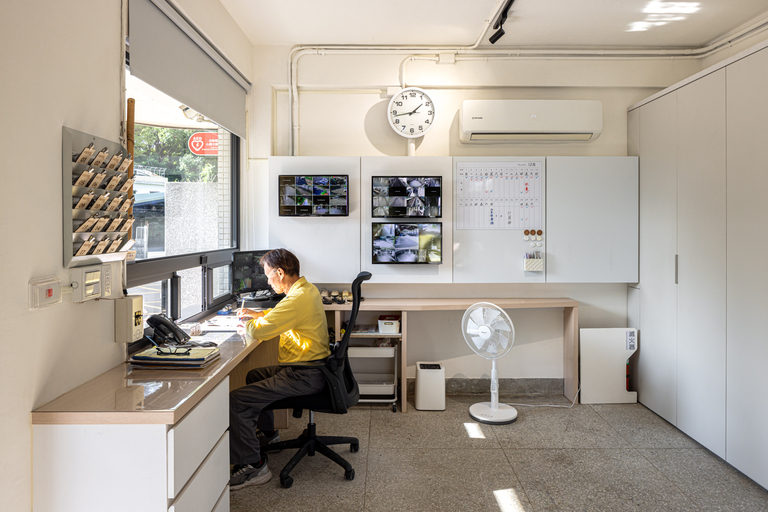
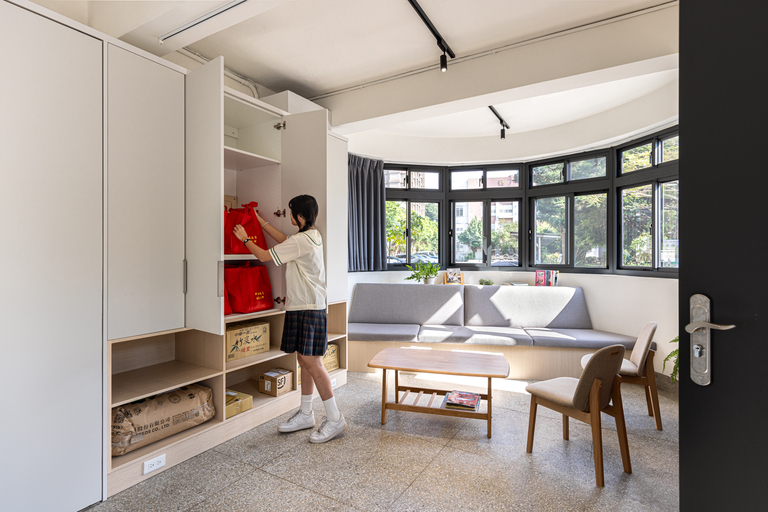
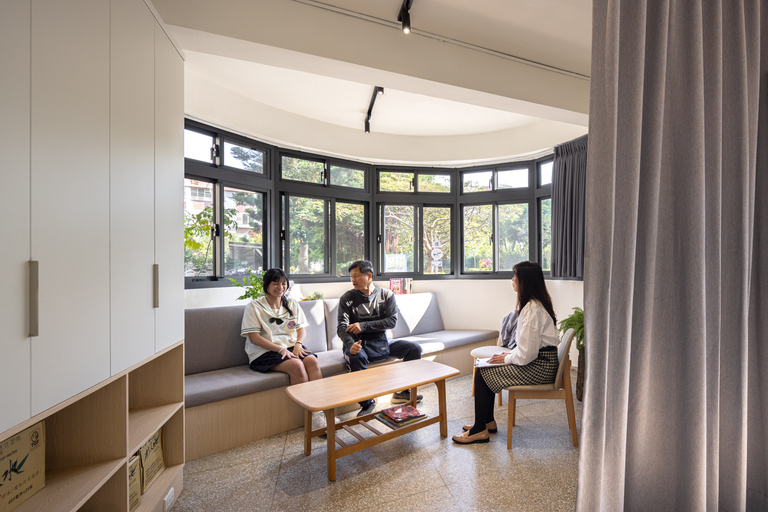
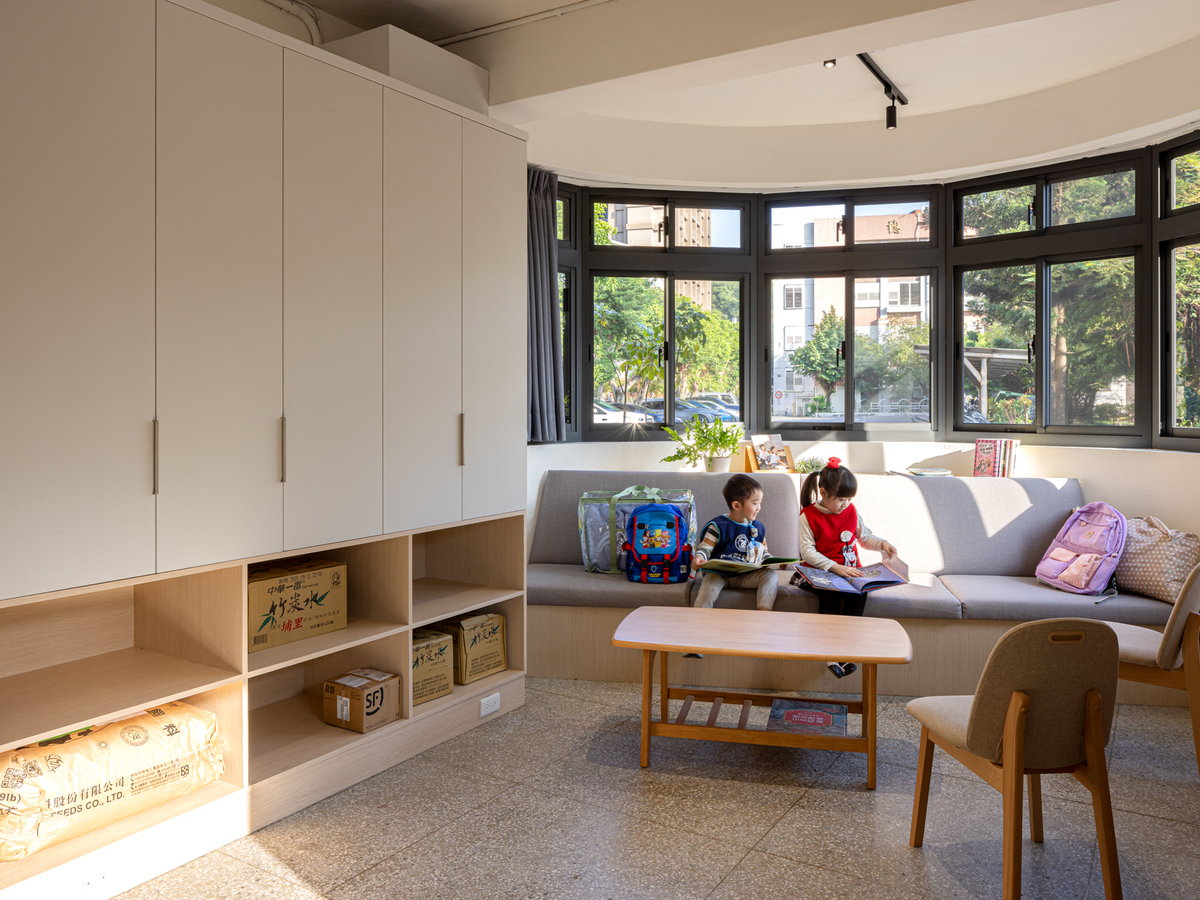
The first step of the renovation was reorganizing circulation. A row of storage cabinets now divides the space, clearly separating public and private zones—security duty area, parent–teacher meeting area, and private storage each receiving its own defined function.
The second step involved reorienting the seating in the meeting area by 45 degrees to create a more intimate and enclosed conversation space, easing the atmosphere for short discussions. In the security duty zone, non-ergonomic furniture was replaced, window sill and desk heights were adjusted, and tangled wiring and equipment were reorganized—resulting in a clean, orderly workspace with a sense of dignity.
For the exterior, accumulated add-on structures and equipment were removed to restore the building’s original, clean appearance. A new semi-circular canopy was added to echo the building’s architectural form, serving as a subtle yet striking enhancement. Most importantly, the iron bars that once confined the space were removed, allowing the lush greenery of the campus to flow indoors. This transformation reconnects the mountain views and tree-lined boulevard, enabling everyone who briefly passes through to enjoy a moment of calm and beauty.








Design analysis
-
Reassess user needs and assign clear, compatible functions throughout the space.
-
Provide suitable settings and furnishings to support brief post-pandemic parent–teacher conversations.
-
Consolidate and reduce cluttered exterior signage and fixtures to restore a clean façade.
-
Remove the incongruent added roof, repair waterproofing, and install an aesthetically refined canopy.
-
Remove iron grilles to reveal the soft, rounded form of the original semi-circular building.