thttt architects
Miaoli Sanwan Elementary School Daping Branch|Food Lab
“ Food education is a way for children to understand the importance of collaboration and communication in a community. ”
— Ann Cooper
Harnessing Nature and Local Resources — Creating a Distinctive Learning Environment for a Rural School
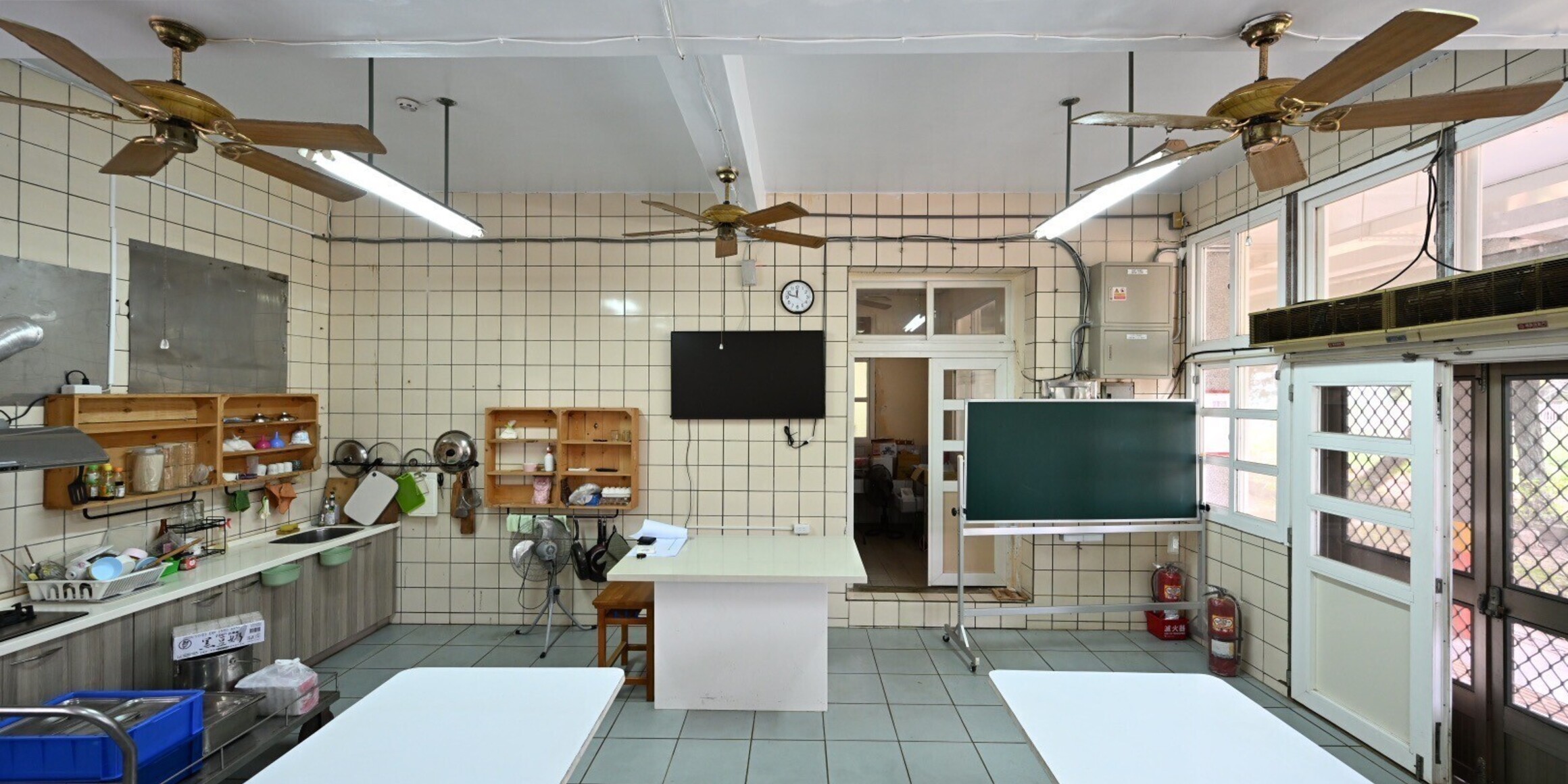
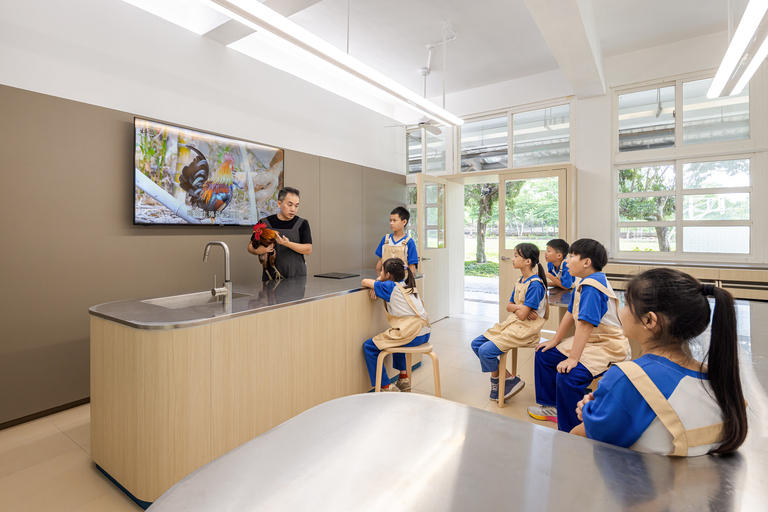
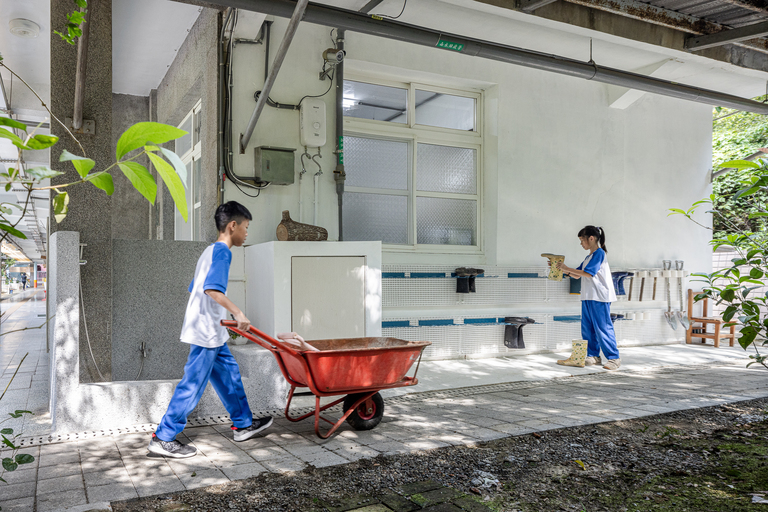
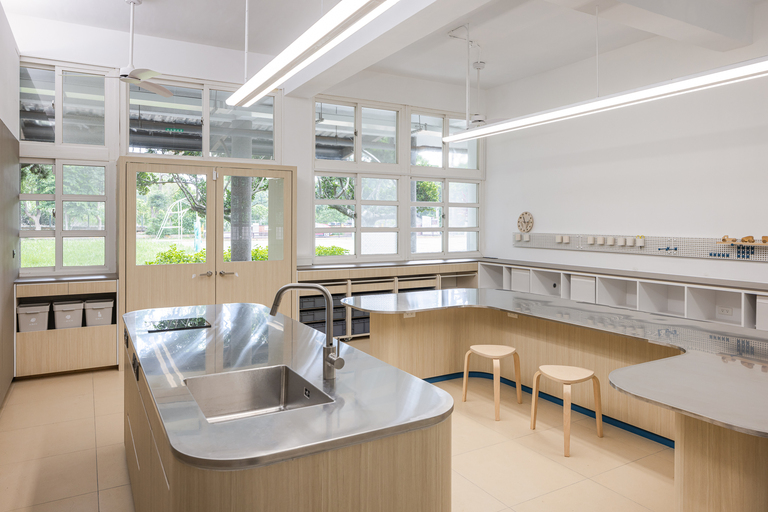
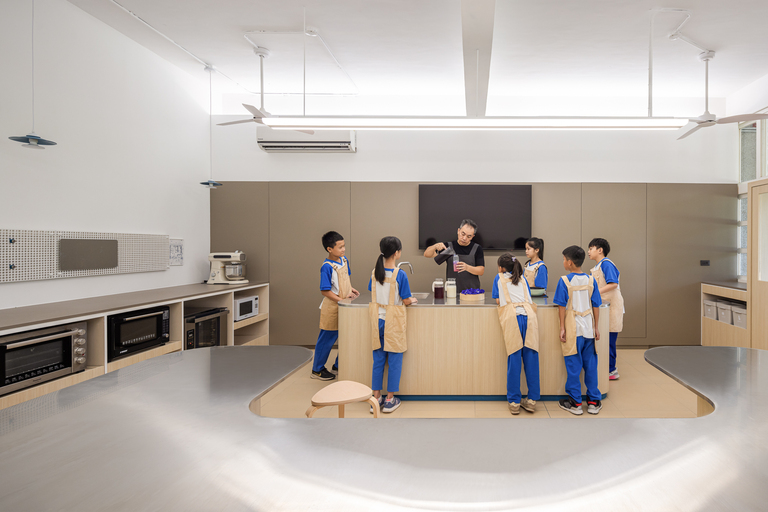
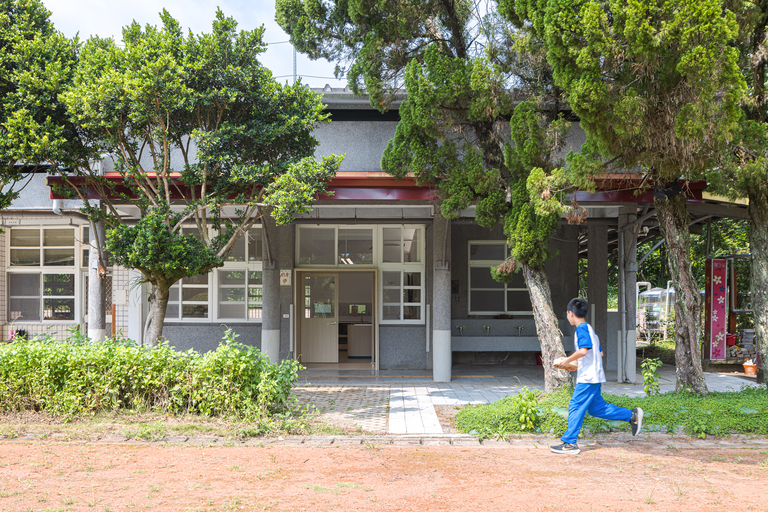
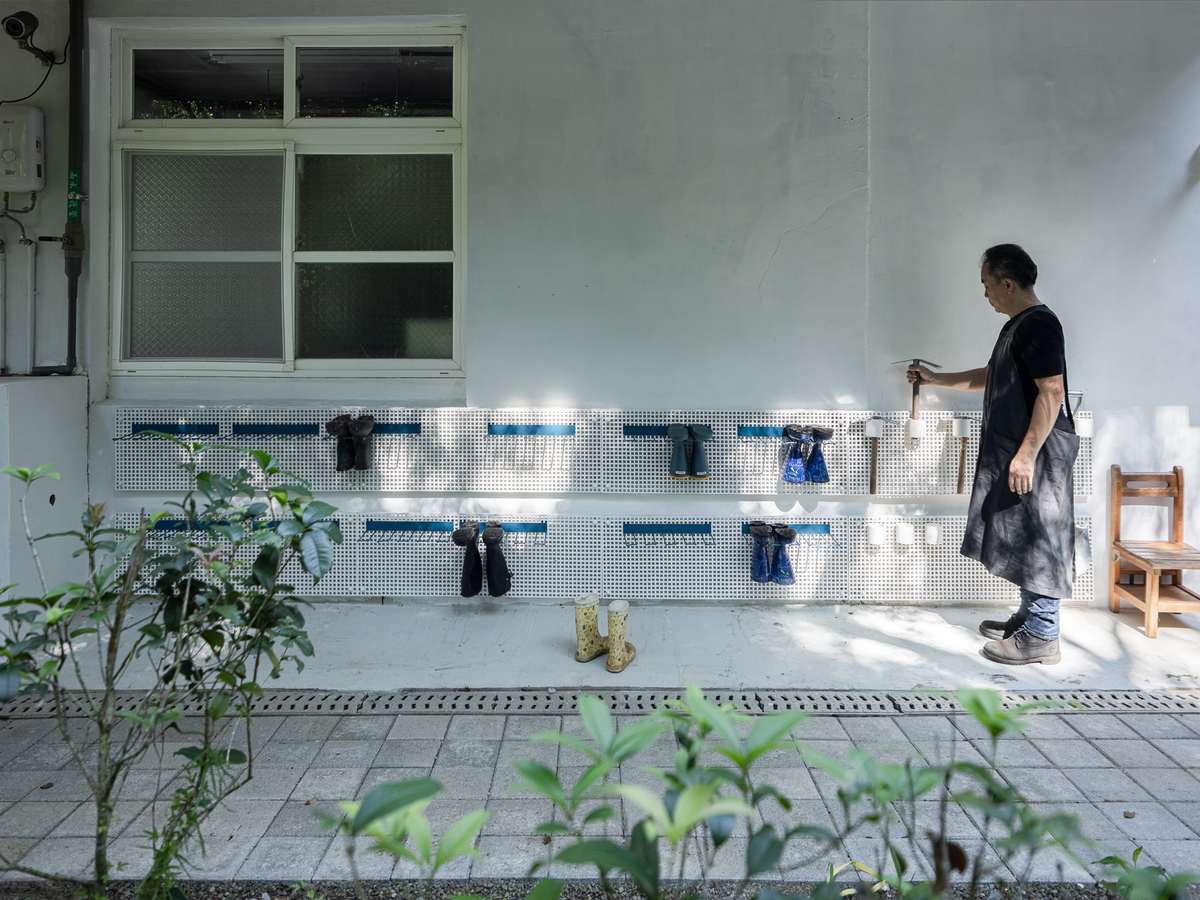
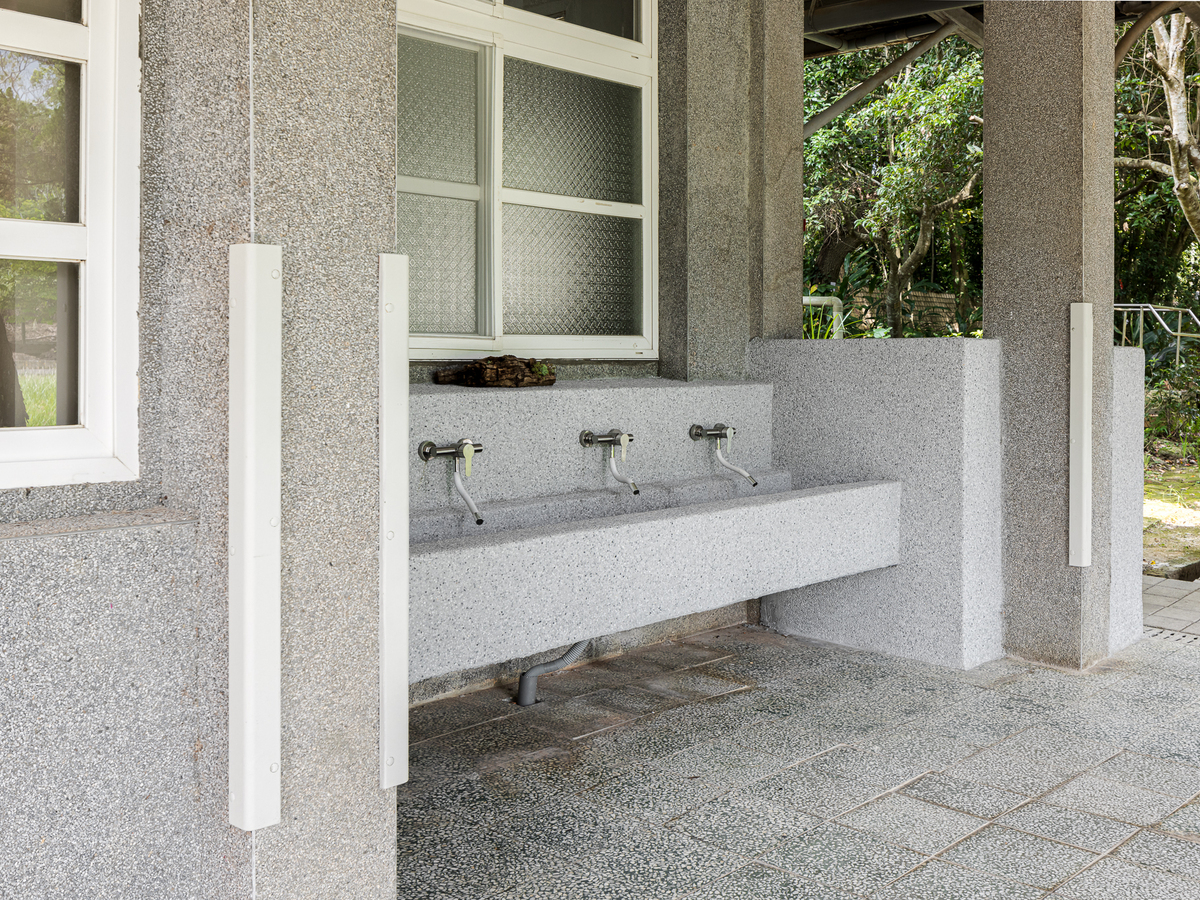
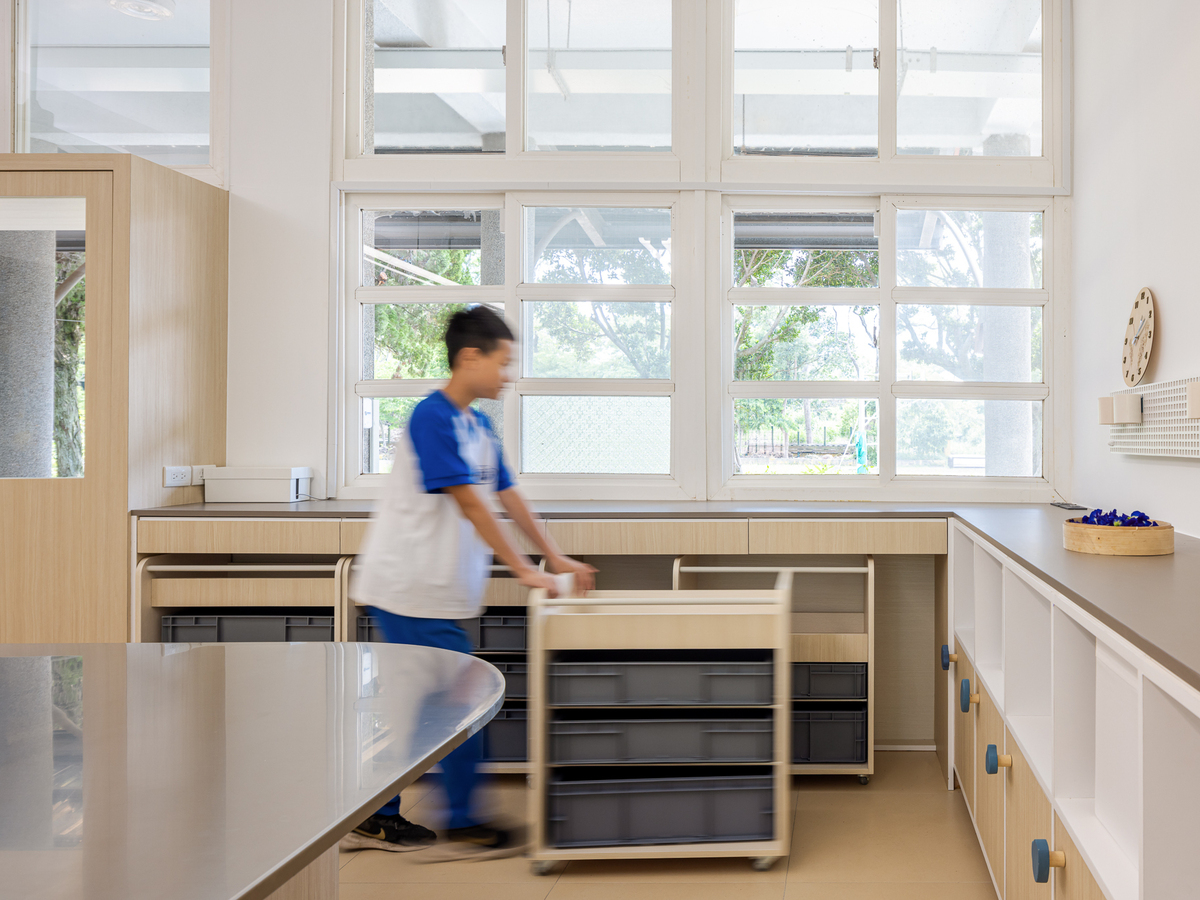
Amid declining birthrates and population outflow, Daping Branch of Sanwan Elementary School continues to strengthen its school-based featured curriculum, building students’ core abilities and attracting families from beyond the district. The school hopes to establish a complete indoor–outdoor food and agricultural education environment, which the design team organized into three interconnected zones: the indoor Food Education Classroom, the outdoor Food-Agriculture Garden, and the transitional corridor between them. In the front teaching area of the indoor classroom, a demonstration zone allows students to observe cooking steps up close, while a custom U-shaped table helps teachers quickly understand students’ learning progress and provide timely support. FRP panels, galvanized steel components, rod fasteners, and shelving form a multifunctional wall system for announcements, student work display, and storage. In the rear storage area, existing equipment was reorganized based on user habits to optimize overall efficiency. In the transitional corridor, the existing planter was removed and replaced with high-pressure bricks to create a smooth, safe indoor–outdoor path. A new foot-washing station gives students a small ritual of cleaning up after outdoor activities, while FRP panels paired with pipe components and hook fasteners provide durable storage for farming tools, rain boots, and other outdoor equipment.
Design + Education — Co-Creating Through Hands-On Experience
After gaining a deep understanding of Teacher’s curriculum, the design team collaborated with the school to develop a cabinet-handle co-creation project. They crafted a story framework tailored to the Food Lab and encouraged students to draw imaginative scenes inspired by food, nature, and daily experiences. Selected illustrations were transformed into unique cabinet-handle designs by the designers, and students—guided by their teacher and the team—shaped, sanded, drilled, assembled, and painted the wooden pieces themselves. These student-made handles now adorn the cabinets throughout the Food Lab, becoming its most precious and eye-catching feature.

Design analysis
-
Prioritize teaching with dining as a secondary use, reorganizing user behavior to define spatial functions and furniture needs.
-
Redesign the interior layout and storage based on teaching requirements, with desks and seating sized appropriately for students.
-
Define three zones—the indoor food education room, outdoor farming garden, and transitional corridor—to link inside–outside learning activities and enhance efficiency.
-
Replace the front planter with concrete pavers to connect indoor and outdoor areas, and protect exposed tree roots with soil mounding and vine planting for long-term health.
-
Incorporate a collaborative making activity with students and teachers to create a distinctive feature within the food education classroom.