YEN PARTNERSHIP ARCHITECTS+MisoSoupDesign
National Kuan-Hsi Senior High School|Tea Factory
“ Dream big, work hard, stay humble; anyone can make history. “
— Brad Meltzer
Transforming Teaching & Practice — Rekindling the Legacy of the Tea-Processing Industry
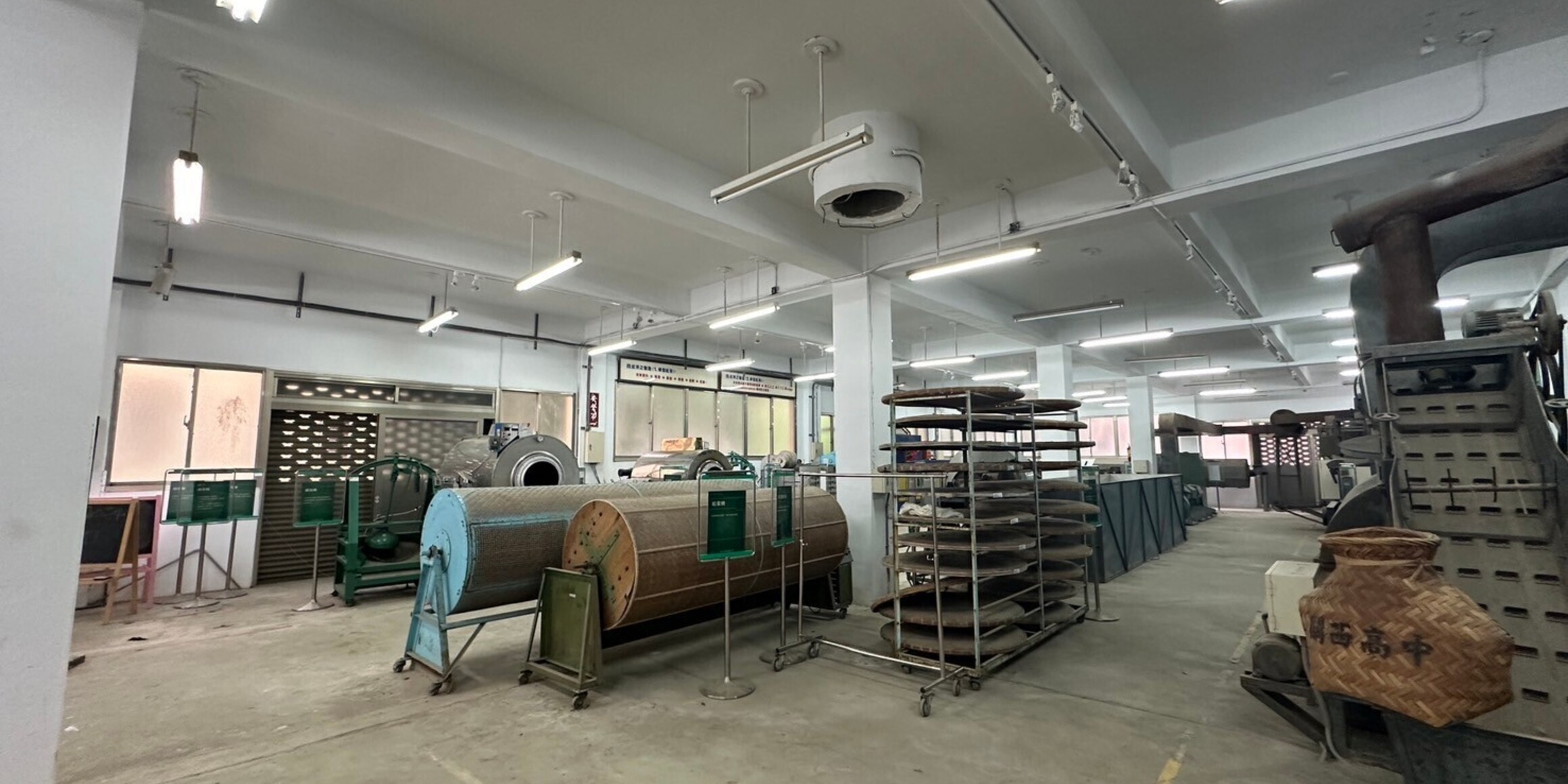
Kuan-Hsi Senior High School owns Taiwan’s only long-standing, campus-based tea-processing factory. However, due to industrial decline and curriculum changes, many machines have gradually been left unused. Through cross-disciplinary collaboration, the school developed a featured curriculum titled Food & Agriculture Exploration, guiding students to learn tea harvesting, processing steps, and machine operations while understanding the historical evolution of Taiwan’s tea industry.
The challenge for the design team was to reactivate old machinery, revitalize the aging building, and create a contemporary learning environment that could tell the stories behind tea-processing tools while supporting modern teaching methods.
Integrating Innovative Curriculum with Story-Driven Design — Creating Taiwan’s Unique “ Tea Factory”
The redesign of the factory is grounded in close collaboration between teachers and the design team. Together, they refined curriculum structure, reorganized teaching processes, and developed a new course titled Tea-Making Studies: Evolution of Tea-Processing Equipment. This ensures that, through the renovated “Tea Factory,” students can better understand both the technical aspects and cultural heritage of tea.
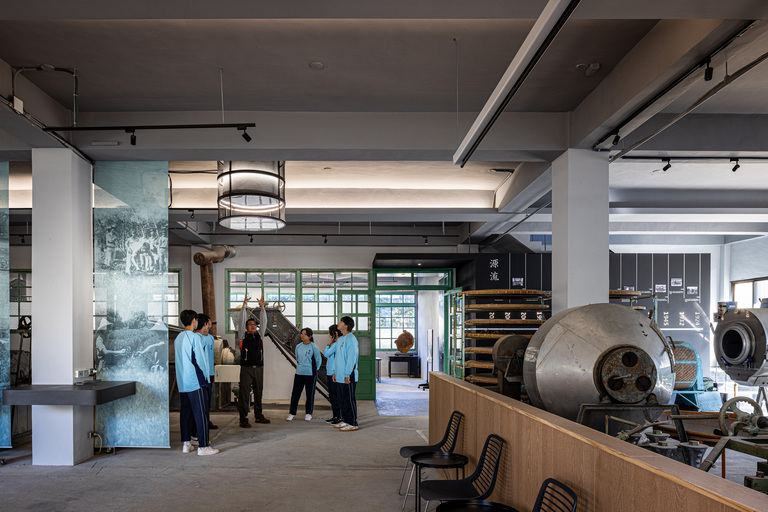
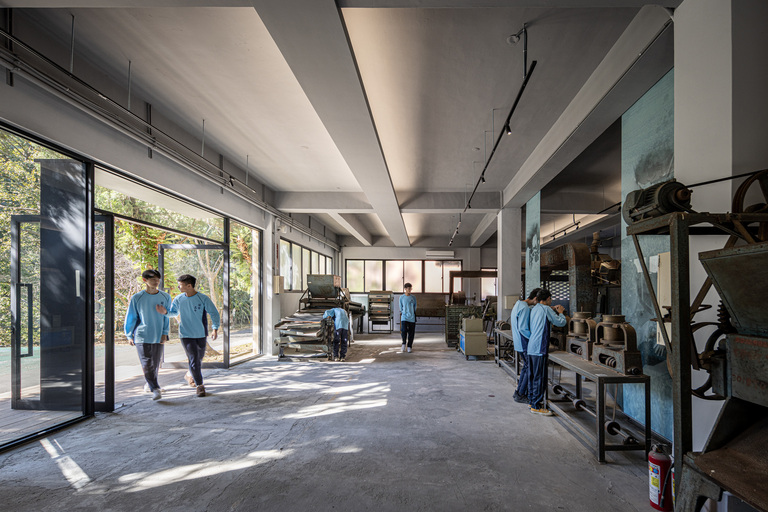
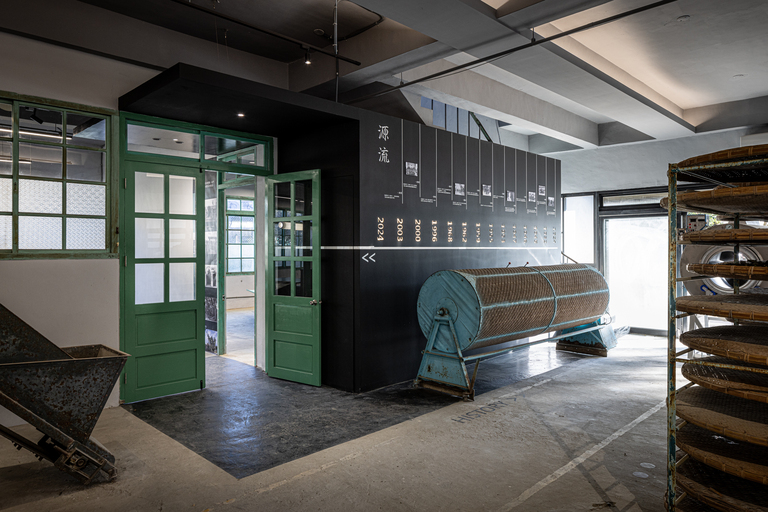
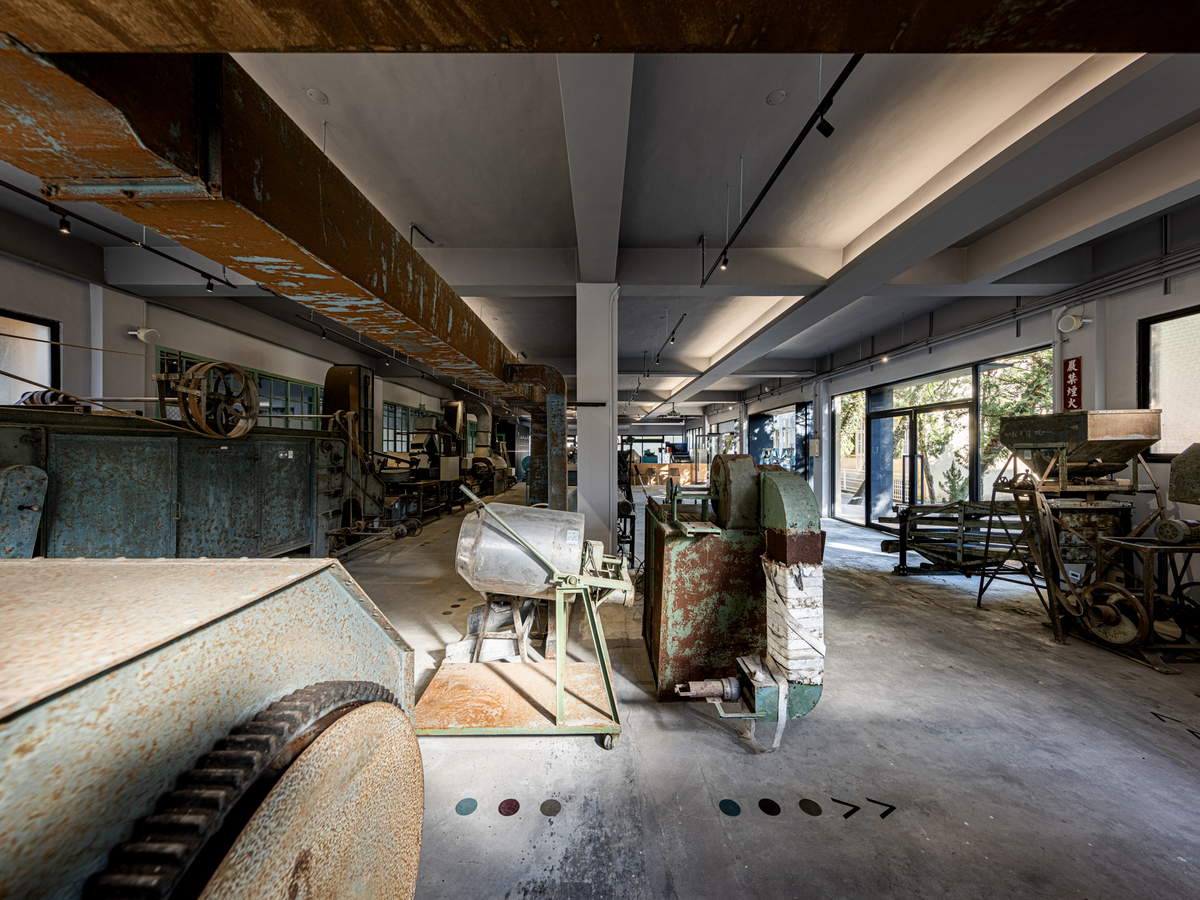
Using this curriculum foundation, the designers reorganized the factory into three major zones—teaching, hands-on practice, and exhibition—with corresponding circulation. Equipment was repositioned according to actual tea-processing order, creating an immersive narrative pathway that presents both workflow and history.
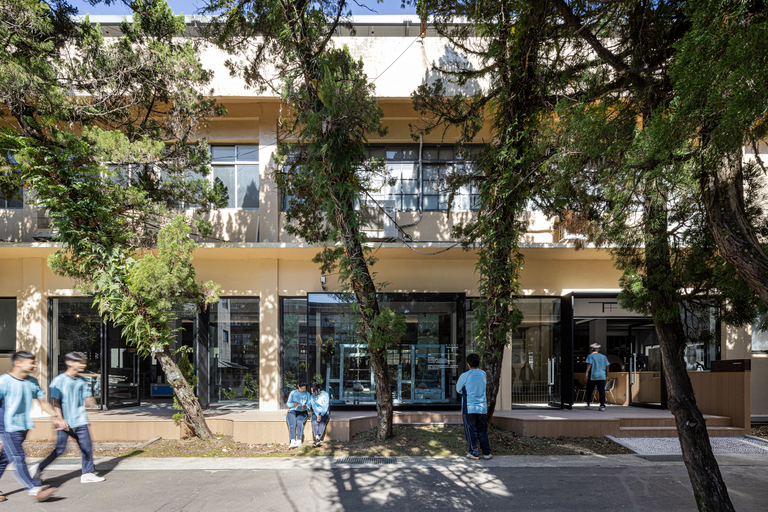
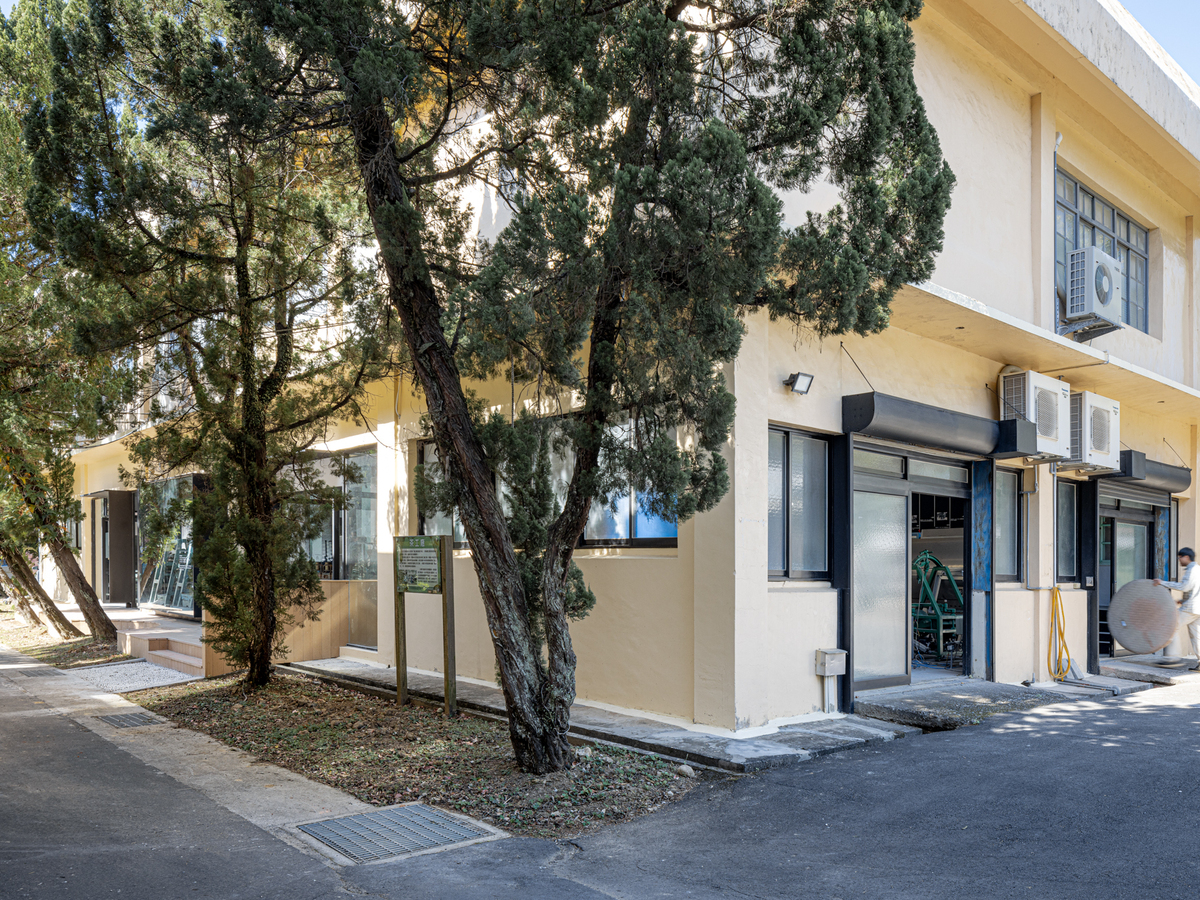
The south entrance was opened up to remove long-standing enclosure, bringing daylight and campus greenery indoors. At the entrance stands the school’s “treasure”—the last remaining cypress wood Wishing-Moon Rolling Machine in Taiwan—serving as a historic greeter that highlights the site’s uniqueness.
Redefining Teaching & Practice Zones — Preserving Heritage, Enhancing Learning
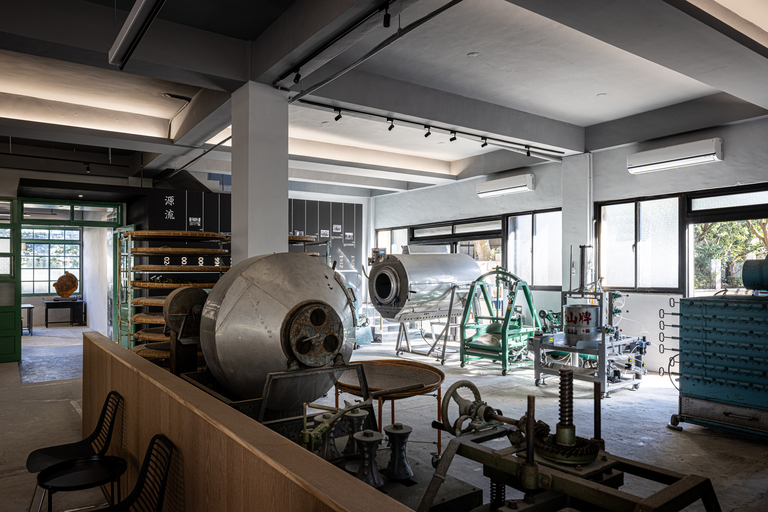
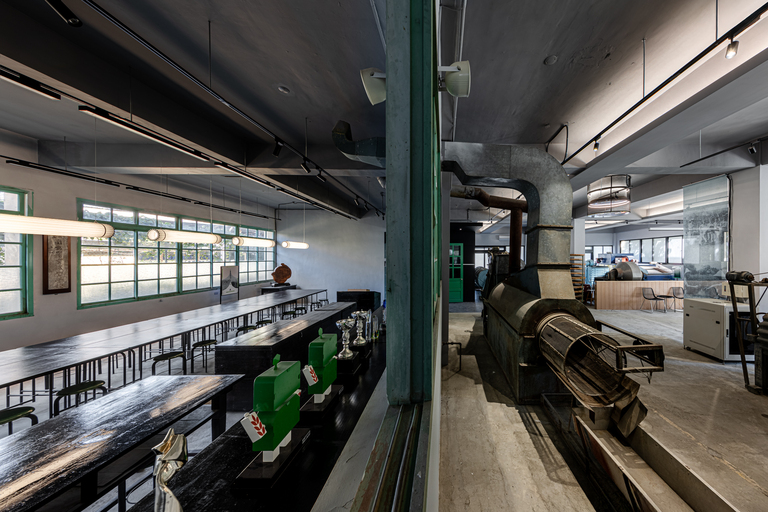
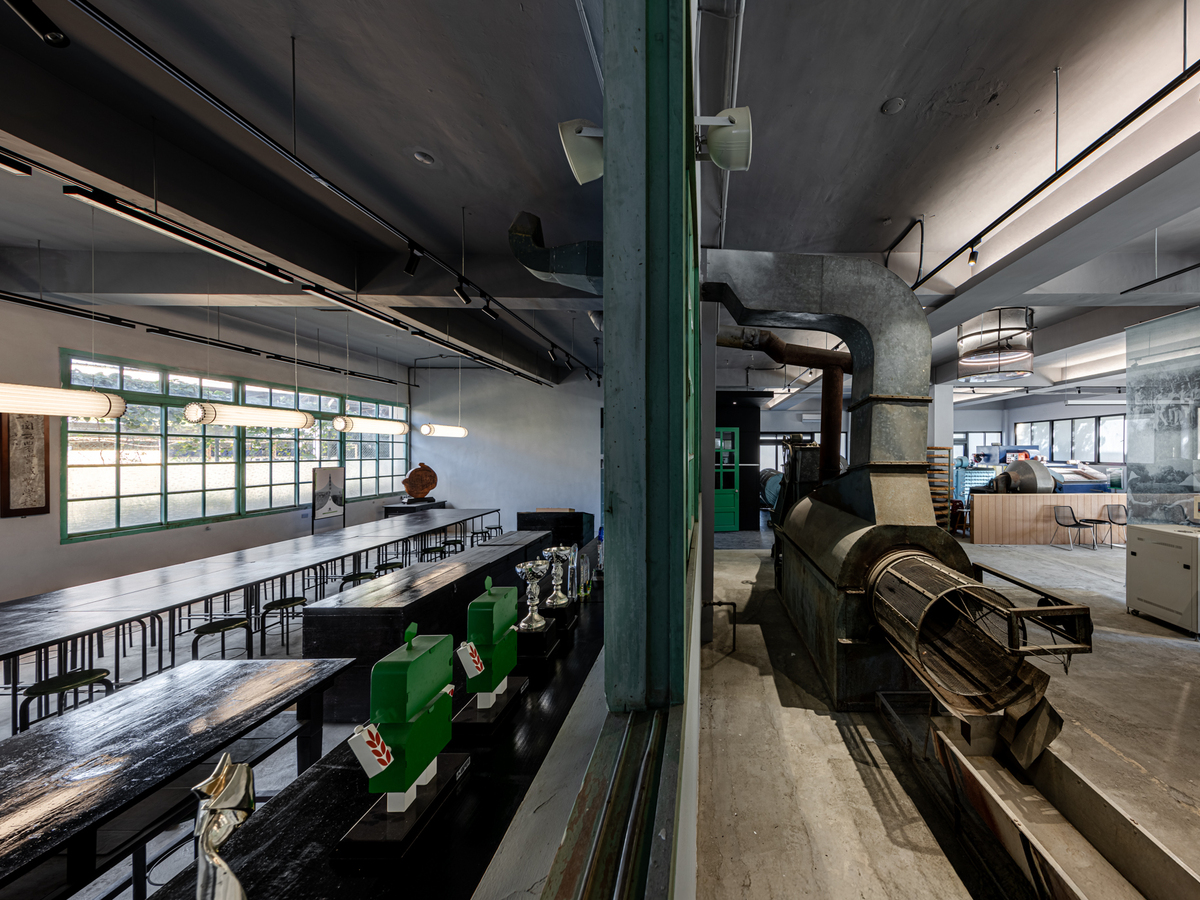
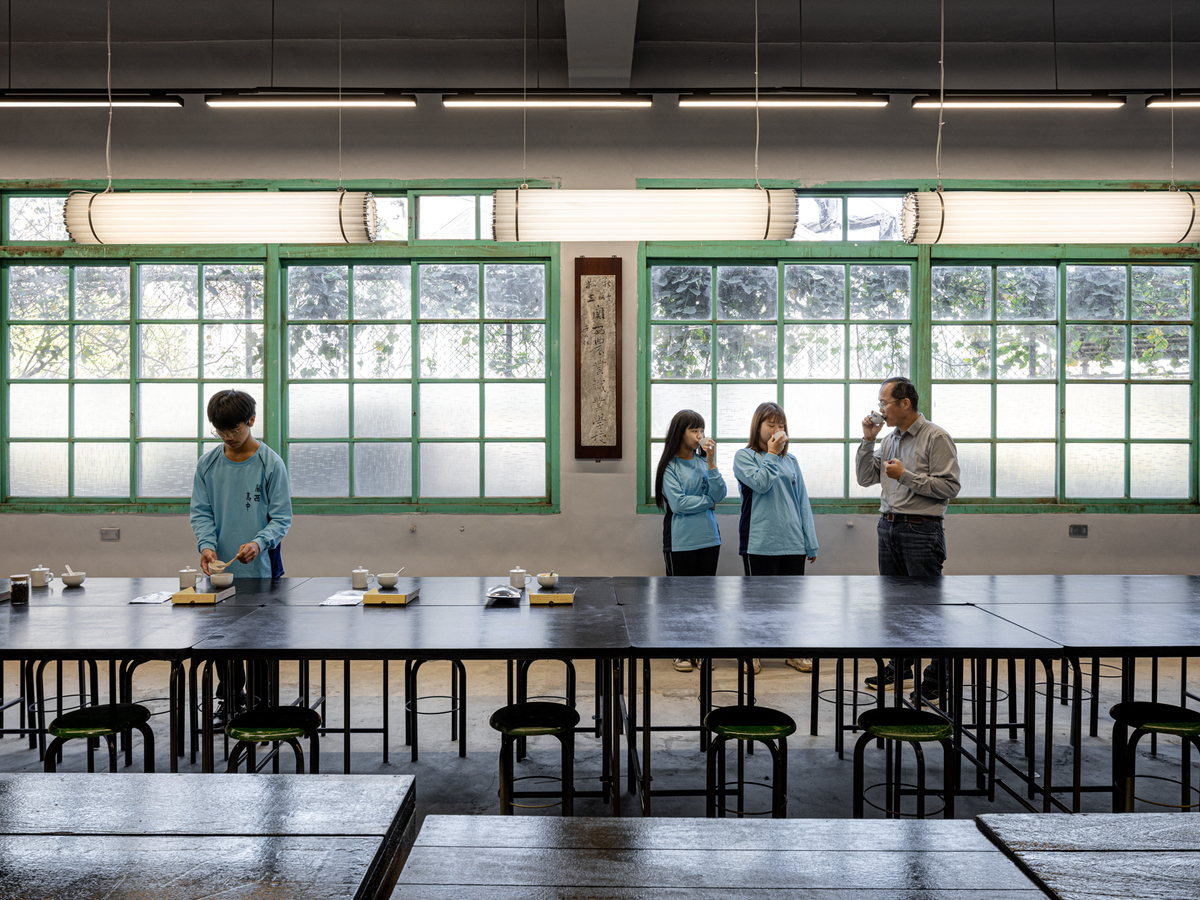
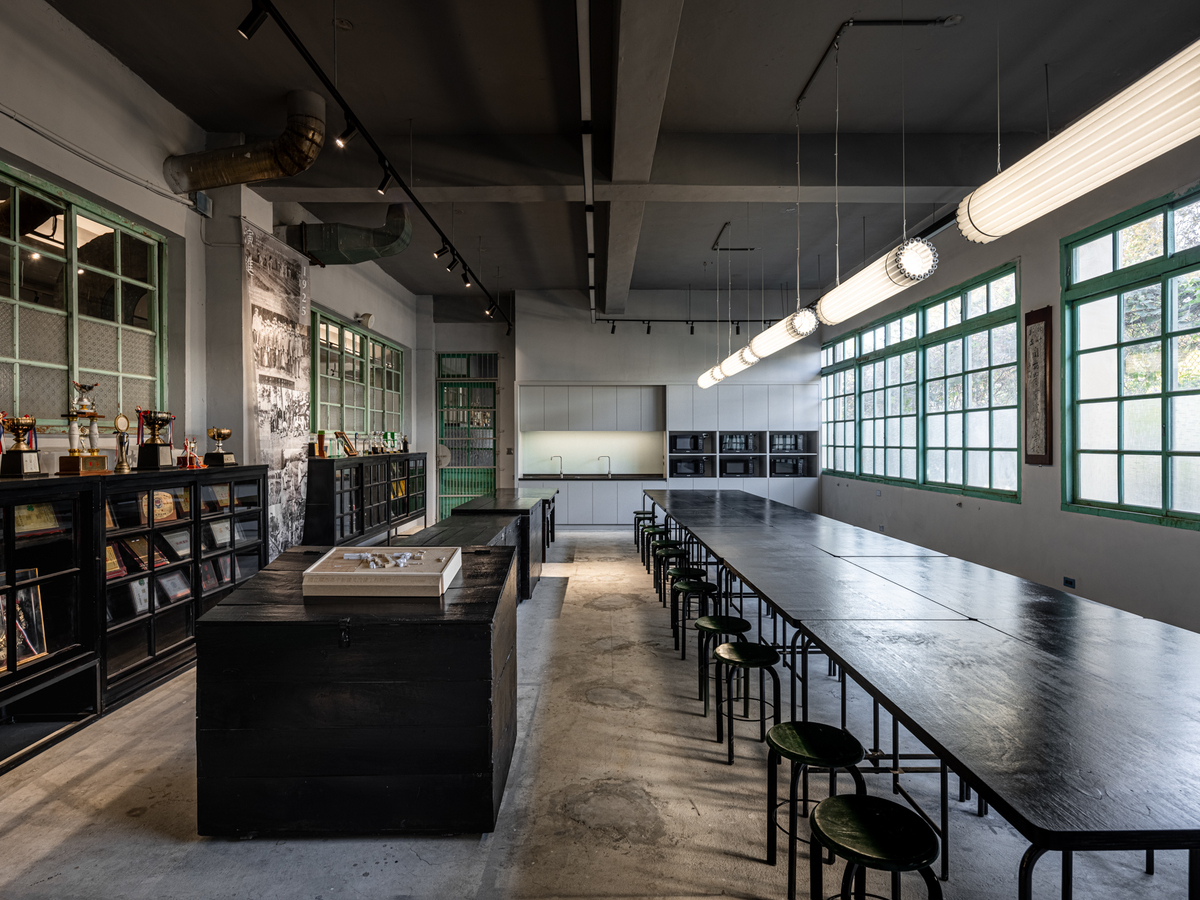
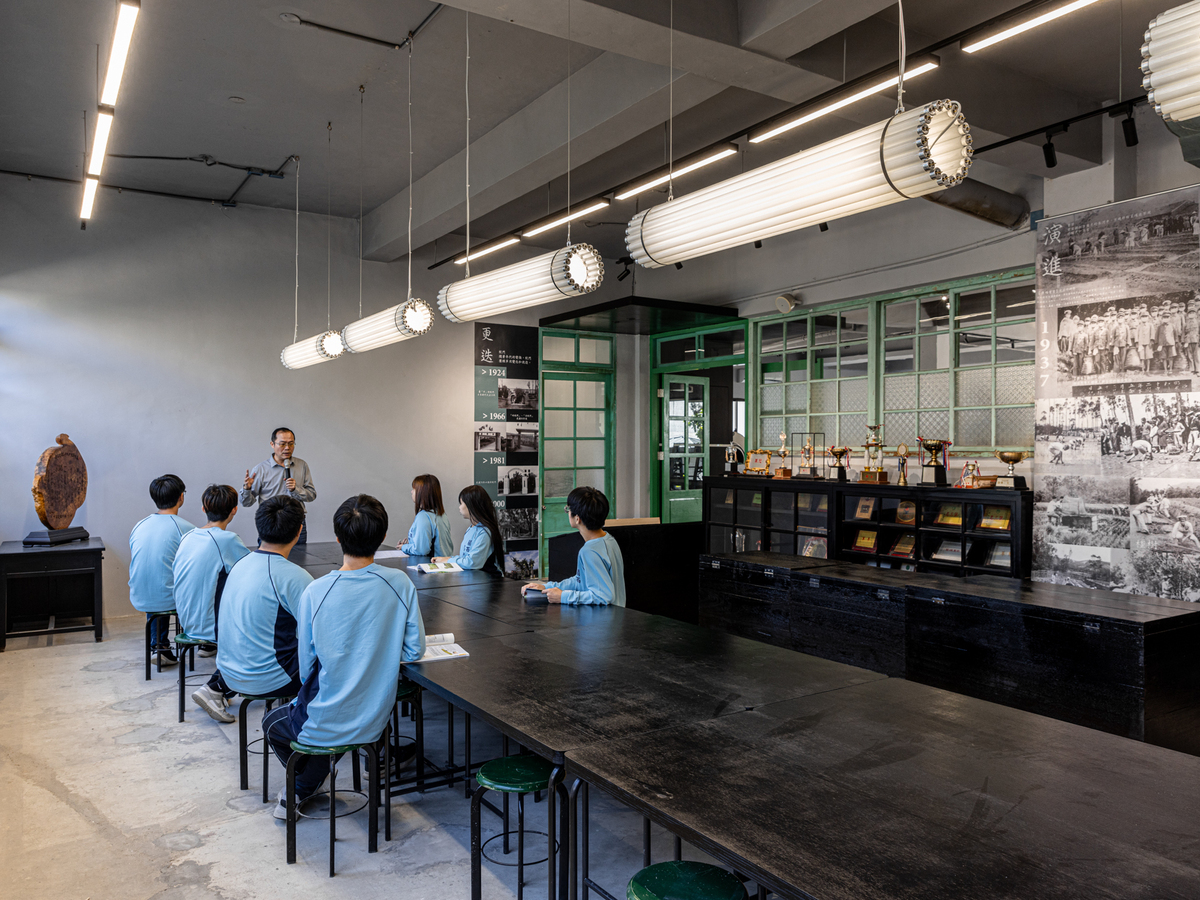
The previously mixed teaching and practice zones were reorganized under a unified layout that also incorporates the adjacent history room. While retaining and revitalizing historical displays, the redesign adds flexible group seating and a tea-tasting platform, creating a complete and coherent teaching environment.
In the practice zone, students engage in hands-on activities based on tea types and processing steps. The teaching zone features movable group desks, tall storage for tea utensils, preserved wooden windows, and a long tea-tasting counter constructed from old wooden cabinets all work together to carry forward the spirit and cultural memory of the old tea factory.









Design analysis
-
Redefine zoning and circulation to integrate teaching, hands-on practice, and exhibition functions.
-
Refine the school-based featured curriculum through cross-disciplinary collaboration and organize historical and functional information on tea-making equipment.
-
Replan equipment placement by aligning the tea-making process with visitor pathways, allowing varied learning and tour routes.
-
Integrate resources by creating a flexible teaching area within the adjacent school history room, including modular tables and a tea-tasting platform.
-
Open the south side toward the landscape, redefine the main entrance, and showcase the rare cypress “Wishing-Moon Rolling Machine” as a symbolic welcome feature.
-
Position the tea factory as a rare large-scale facility that unifies historic machinery, hands-on practice, and exhibition, serving as a model experiential learning site.