

 office aaa
Taichung Municipal Chung-Hsiao Elementary School|Wonderland
“ Food education can cultivate a healthy mind and body and establish a foundation for a rich personality.”
Scenario-Based Spatial Planning — Expanding the Imagination of Use
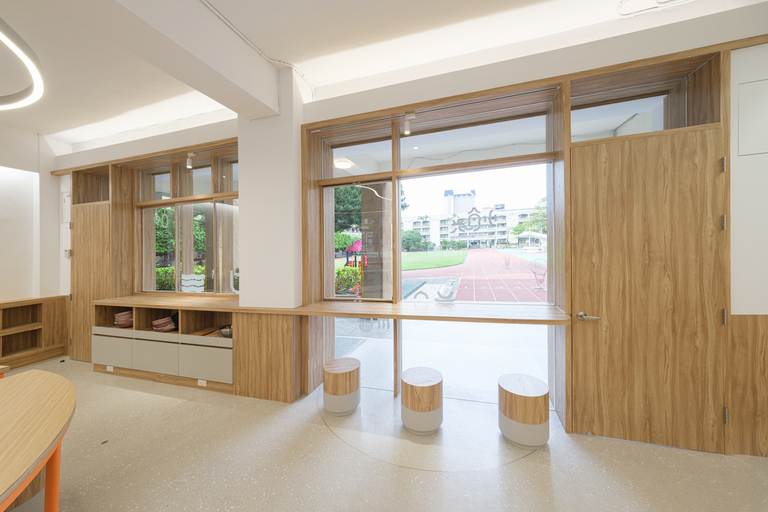
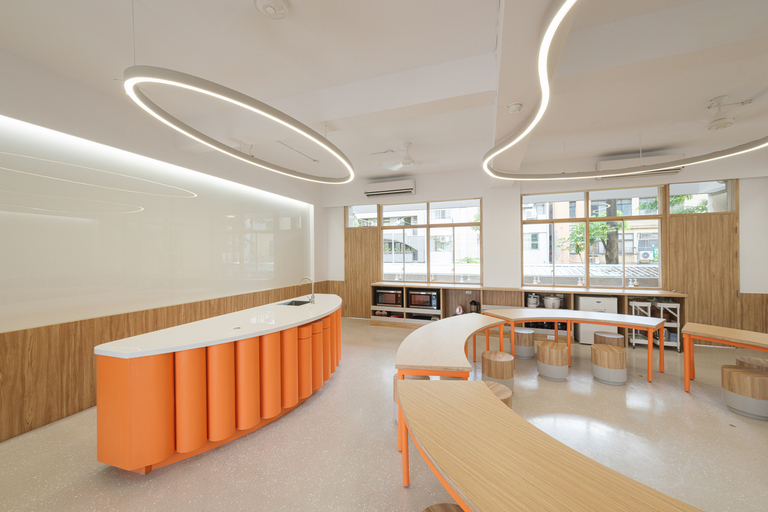
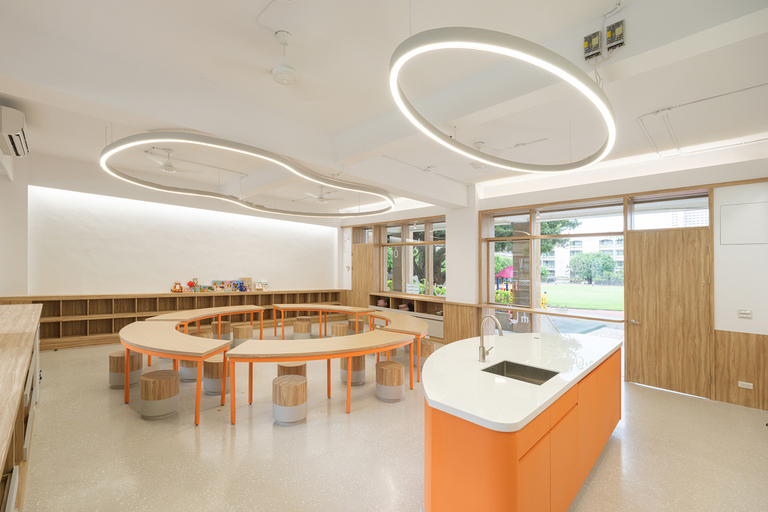
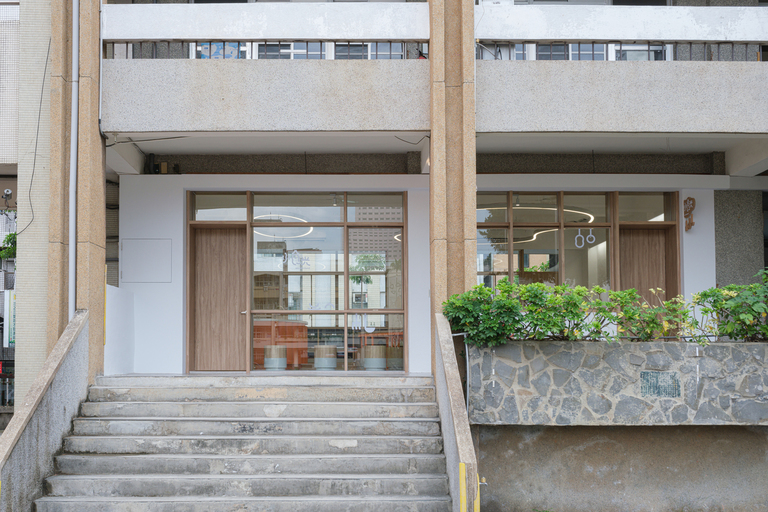
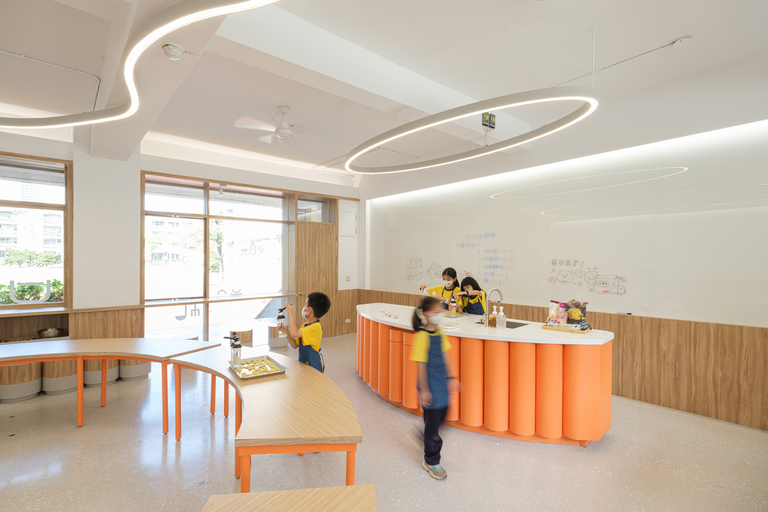
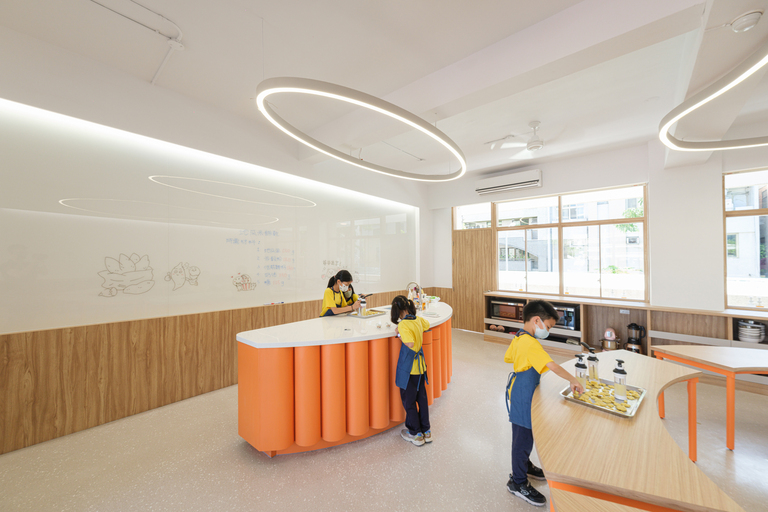
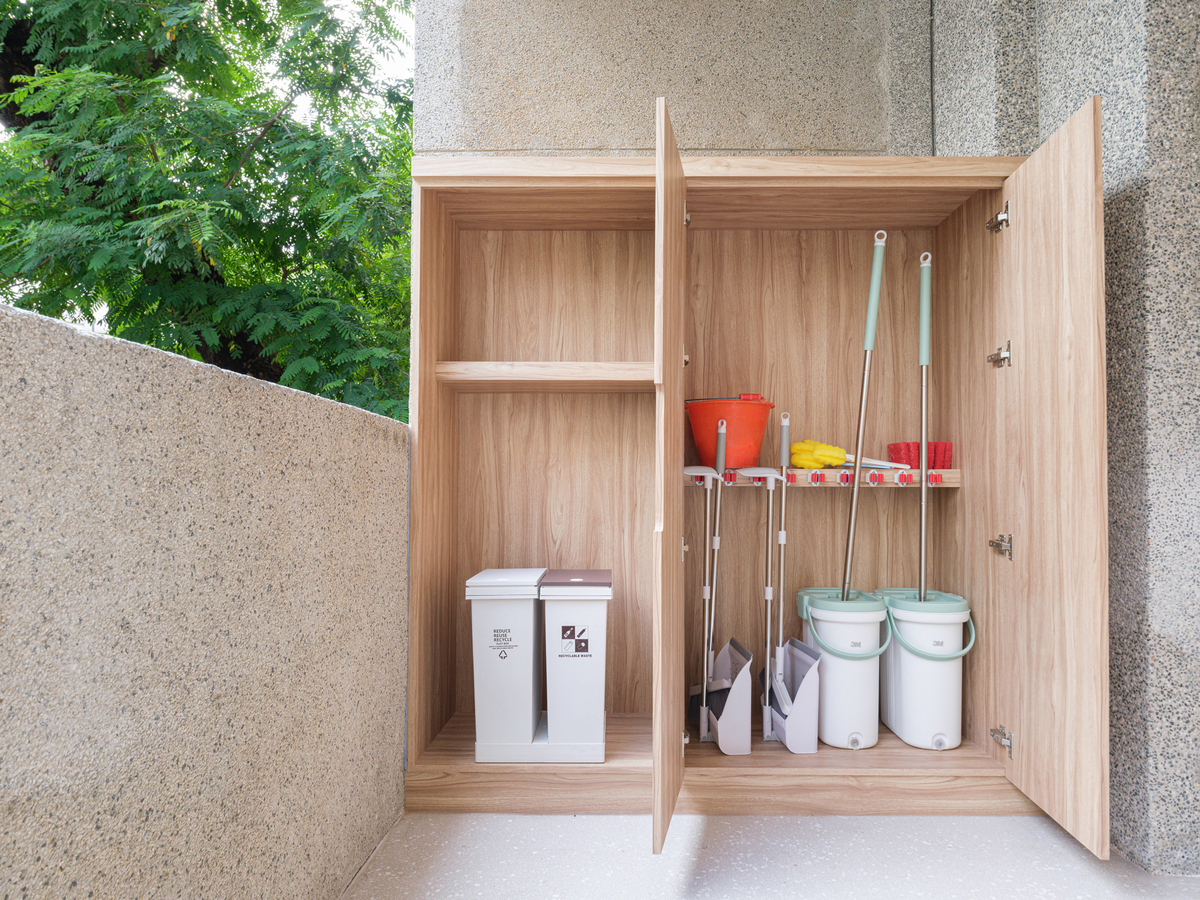
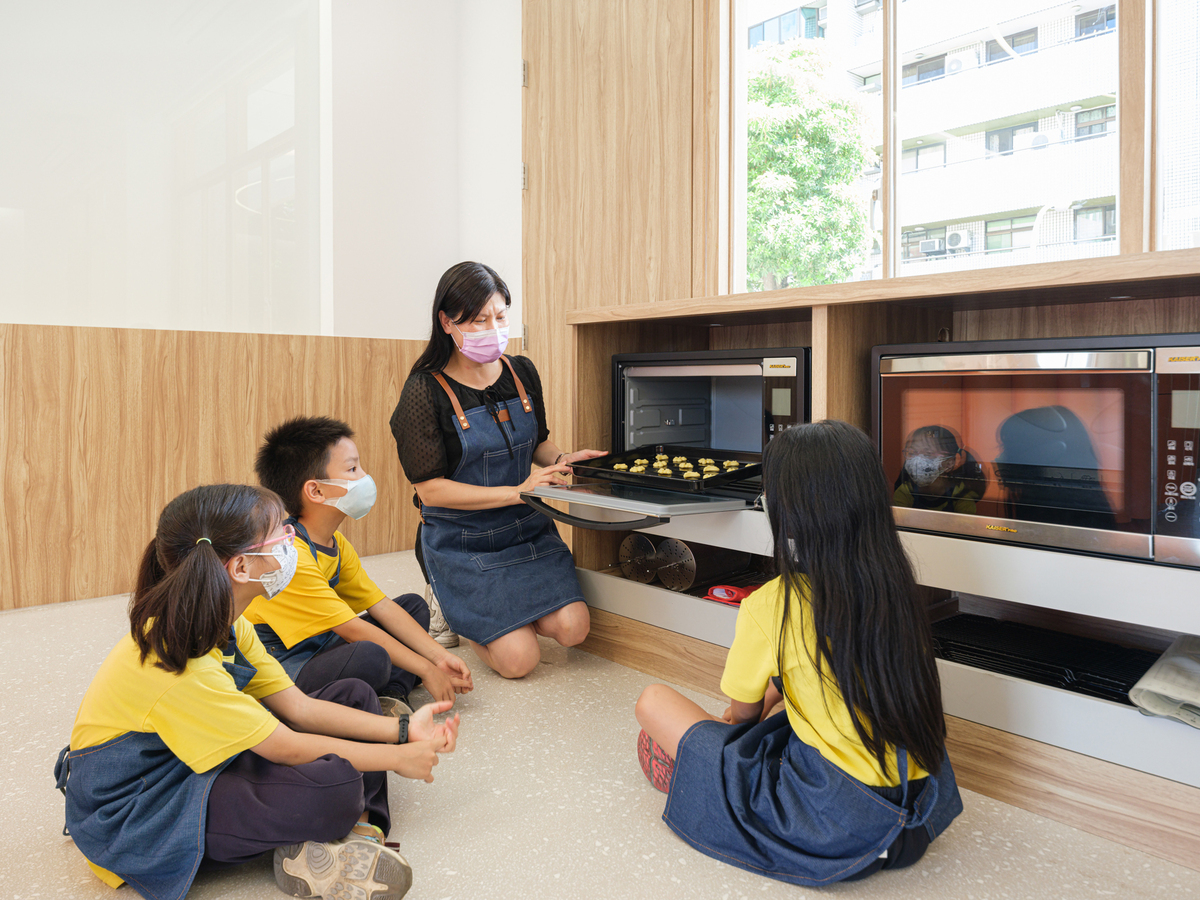
The original desks, chairs, and low cabinets along the walls could not accommodate the needs of food and agricultural education nor the large volume of required storage. Teachers and students often had to rearrange desks within limited space or move to the corridor, while cooking tools and ingredients lacked proper storage. Through a service-design approach, the design team reexamined the entire space and introduced scenario-based spatial imagination. By selectively revealing portions of the kitchen equipment, the space gains a distinctive atmosphere of food education, expanding its functional possibilities despite spatial limitations.
Organic-Shaped Desks and Chairs — More Flexibility, More Freedom
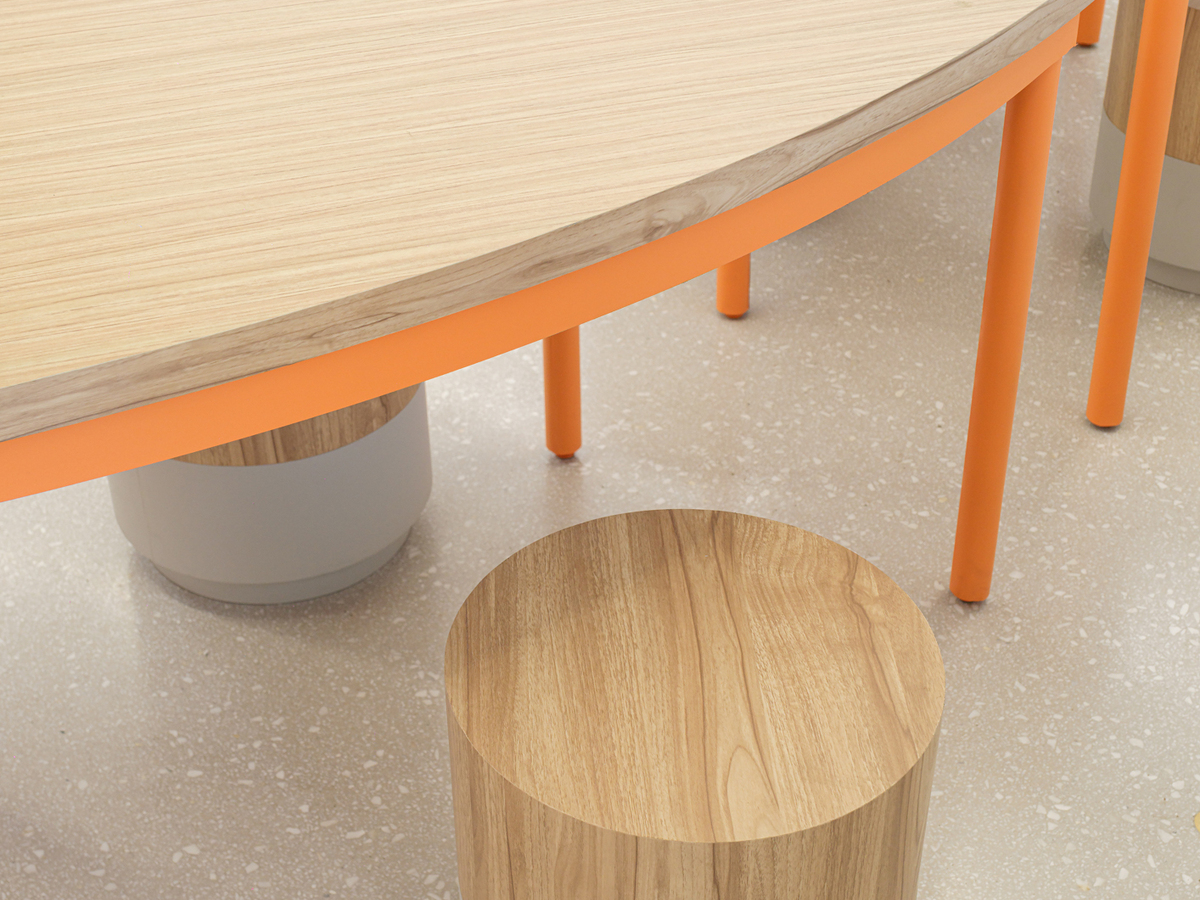
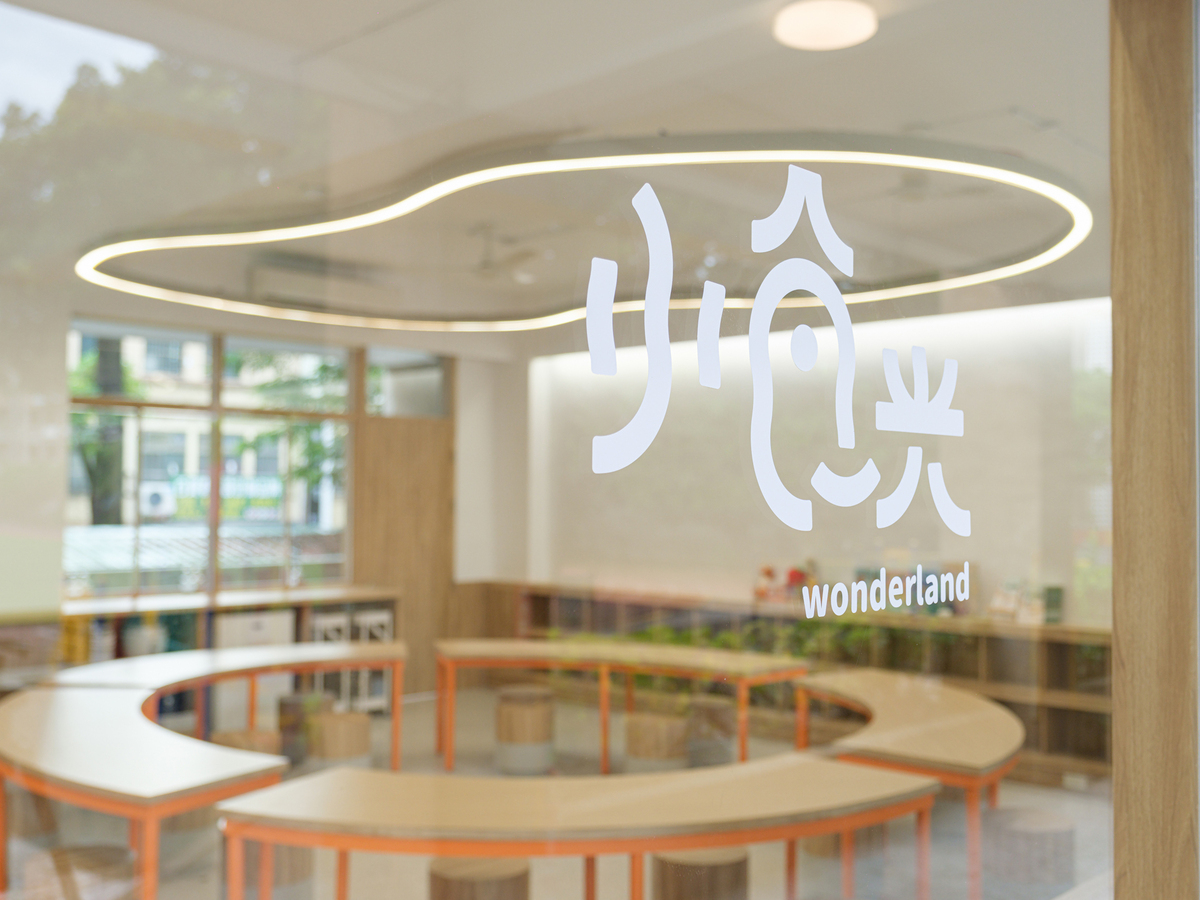
Food and agricultural education emphasizes group-based learning and hands-on food preparation to help students understand ingredients and cooking processes. As such, flexible and diverse furniture arrangements became the key focus of this renovation. The design team developed organically shaped modular desks that support both small-group activities and whole-class instruction, overturning the stereotype that organic forms are costly or impractical. These elements allow the classroom to adapt to various teaching modes with ease and creativity.


Design analysis
-
Enhance the sense of ritual in food and agricultural education to stimulate student engagement.
-
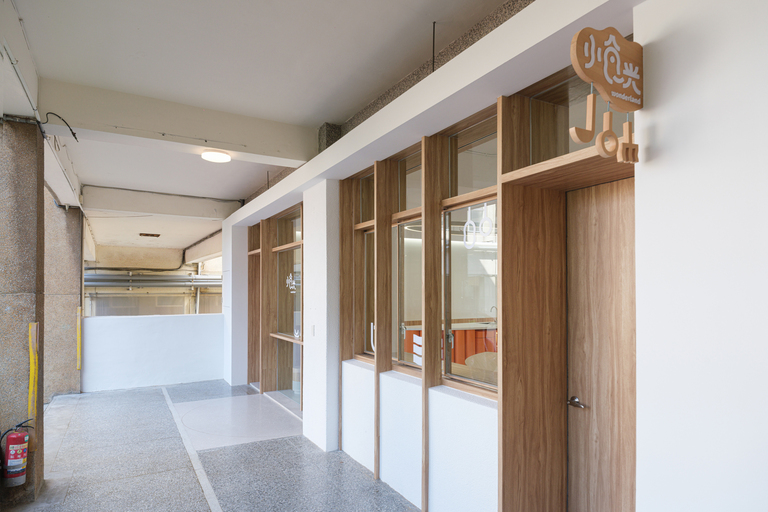
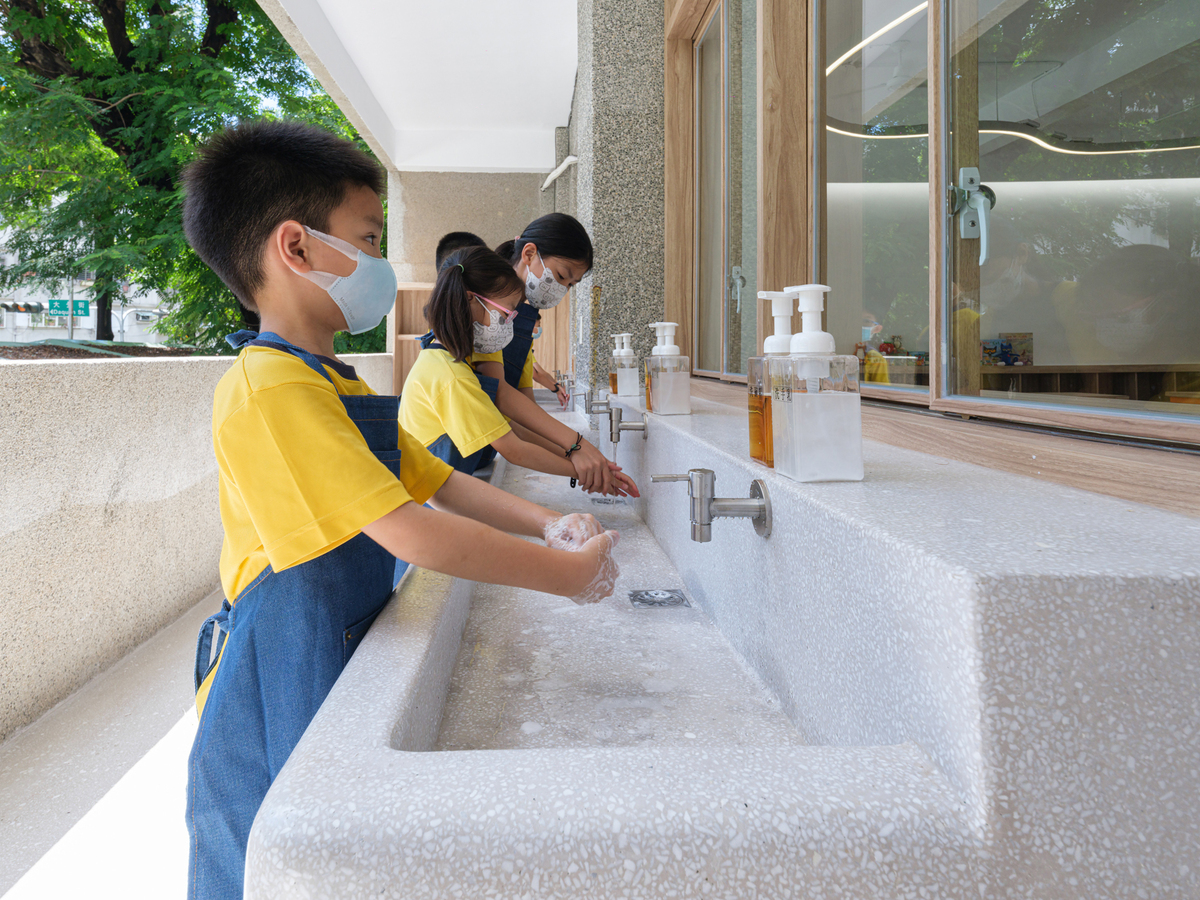
Integrate corridors, balconies, and adjacent spaces according to teaching flow to create a cohesive and functional demonstration space.
-
Use organically shaped modular desks and chairs to support diverse teaching scenarios.
